
STEAD is a science, technology, environment, agriculture, and design charter high school focused on solving real challenges in food, health, energy, and the environment.
Your student learns by doing, through our agriculture pathways in plant, animal, food, and environmental science. Using project-based learning, students explore guiding questions and turn their findings into real projects. Math, art, music, world languages, English, and history all connect to that work through focused study, Socratic seminars, and community presentations.
The STEAD Approach
Guides (our teachers) plan projects as a team, then coach student voice and choice through collaboration, skill-building, and deeper content knowledge. English, science, and social studies come together to answer one essential question, which students explore through a project they present on Exhibition Night at the end of each quarter.


Project-based learning
Heads, hearts, and hands are all engaged as students develop their passions and grow into lifelong learners, thinkers, creators, and changemakers. As PBLWorks puts it, project-based learning “unleashes a contagious, creative energy among students and teachers.” Every STEAD student graduates with real work and service experience, gathered in a professional portfolio.
Cognia Certification
STEAD has earned Cognia STEM Certification, an international recognition for schools with a strong, effective STEM focus. We see STEM as a process of ideas and action. Our project-based model gives students room to question and explore, always grounded in real-world action and connection, so the students learning here become the changemakers of tomorrow. The world’s largest accreditation agency agrees.


Standards-based grading
STEAD uses standards-based grading, which focuses on how well students master the skills in each subject. Instead of traditional letter grades, it gives students, guides, and families a clearer picture of exactly which skills a student has mastered and where to grow next. At the end of the year, those scores convert into traditional letter grades.

Agriculture pathways
Our pathways give your student a head start, with specialized classes and real work experience in fields where jobs are in demand. STEAD’s pathways cultivate leaders ready to solve the challenges facing agriculture today. Choose from four pathways: Animal Science, Plant Science, Food Science, and Environmental Resources.
Advanced Placement
STEAD offers a wide range of AP courses, open to every student. We’re also one of the few schools in Colorado, and the only one in 27J, to offer the AP Capstone program. It’s an alternative to our agriculture pathways, and students can do both. Capstone students can even graduate with an original, thesis-length research paper to share with colleges.

Work-based learning
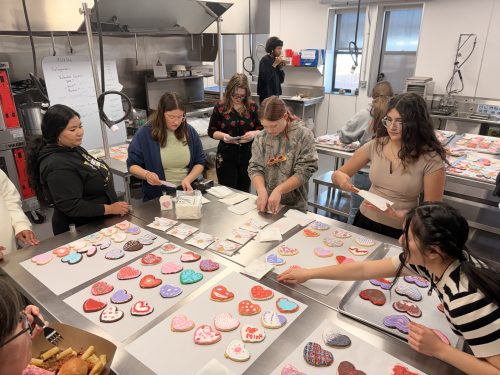
Our goal is to prepare your student for a regenerative future through hands-on study and experience that readies them for real work in the world. To deliver on that promise, every student completes an internship with an industry, non-profit, or community partner, or an entrepreneurship and leadership role right here on campus.

GRADUATION REQUIREMENTS
STEAD’s graduation requirements meet or exceed both 27J and Colorado’s Higher Education Admission Requirements (HEAR). Beyond that, every graduate completes an agriculture pathway or AP Capstone diploma, builds a post-secondary plan, and has the chance to complete an internship and earn college credit.

